











Heating a home efficiently is one of the biggest challenges for US homeowners, particularly in older properties where walls offer little thermal resistance. A significant amount of warmth generated by your central heating system simply disappears through external walls — and that lost heat costs money. Radiator reflectors are one of the most talked-about low-cost solutions to this problem. But do they actually deliver on their promises, or are they little more than a DIY distraction?
This guide from Rockaya Global covers everything you need to know: how radiator reflectors work, what the evidence says, how to fit them correctly, and when it’s simply not worth the effort.
What Are Radiator Reflectors?
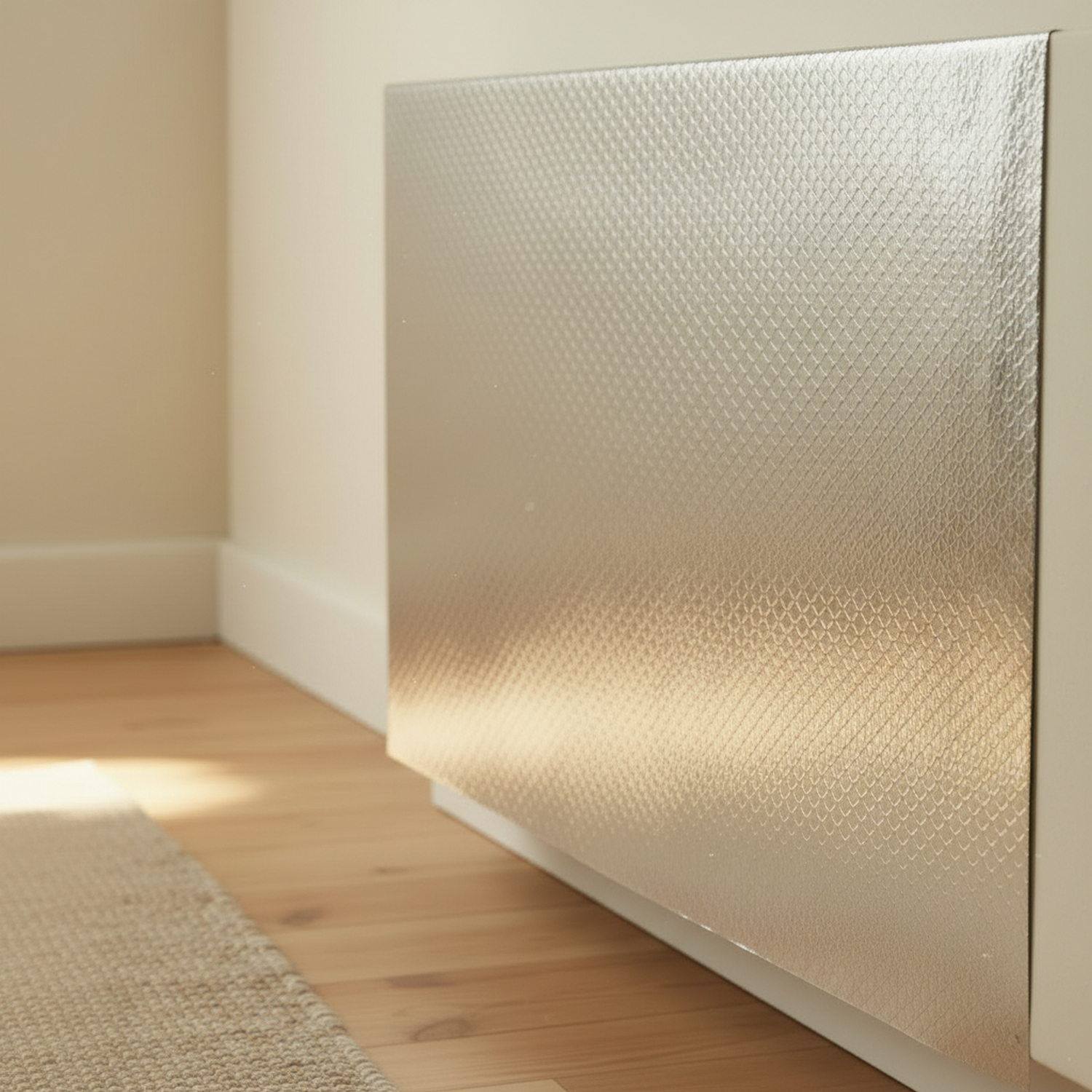
Radiator reflectors — also known as radiator foil or reflective radiator panels — are thin sheets of reflective material designed to sit between your radiator and the wall behind it. Most are made from an aluminium foil layer backed by insulating foam or polyester.
The principle is straightforward. Radiators emit some heat backwards into the wall they’re mounted on. If that wall is an uninsulated external wall, a portion of that warmth passes straight through the brickwork and is lost to the outside. A radiator reflector acts as a barrier, bouncing that heat back into the room instead.
Do Radiator Reflectors Actually Save Energy and Money?
The short answer is yes — under the right conditions. Fitting radiator reflectors to uninsulated external walls can save on energy bills and potentially cut your carbon footprint.
One important caveat: radiator reflectors are only effective on external walls. Fitting them behind radiators on internal walls offers no benefit — the heat lost to an internal wall simply warms the adjoining room, staying in your home either way.
Pros and Cons: Modern vs Older Homes
Older homes with solid, uninsulated walls stand to benefit most from radiator reflectors. Solid brick construction offers minimal resistance to heat flow, so reflectors can make a noticeable difference in rooms that have always felt difficult to warm.
Modern homes built to current insulation standards offer far less scope for improvement. If your external walls already have cavity wall insulation, reflectors will have a minimal effect — the wall is already doing most of the thermal work.
Pros:
- Low cost
- Quick and easy to install
- Effective on uninsulated external walls
- Reduces carbon footprint
- Suitable for renters (clip-on versions available)
Cons:
- No benefit on internal walls or well-insulated walls
- Reflects radiant heat only — most radiator heat is convective
- Poor installation can disrupt airflow and heat distribution
- Only a small fraction of the total home heat loss is addressed
Step-by-Step: How to Install Radiator Reflectors
- Measure the radiators on your external walls to establish the area you need to cover.
- Purchase a purpose-made roll of radiator reflector foil from a DIY store.
- Switch off your heating or close the thermostatic radiator valve on the relevant radiator, and allow it to cool fully before starting work.
- Cut the foil to fit neatly behind the radiator. It should sit slightly smaller than the radiator itself so it’s hidden from view.
- Attach the foil to the wall using double-sided tape or the adhesive backing included with the panel, if applicable. Some panels come with clips that mount directly to the radiator.
- Slide the panel behind the radiator and press it firmly against the wall to ensure good contact.
If you are undertaking a broader renovation and the radiators are already removed from the wall, this is the ideal time to fit reflectors — the job is considerably easier with clear access to the wall surface.
Are Expensive Radiator Reflectors Better Than DIY Foil?
Purpose-built radiator reflector panels consistently outperform kitchen foil as an improvised alternative. Kitchen aluminium foil lacks the insulating backing of proper panels, is difficult to keep in place, and does not carry the same reflective properties as products designed for the purpose.
If budget is a concern and you opt for kitchen foil temporarily, taping it to a piece of foam board or card first will improve its rigidity and performance. That said, purpose-made panels offer a better investment. They fit well, stay in place, and perform consistently.
For durable, low-maintenance options, stainless steel radiators offer corrosion resistance alongside excellent heat output — a practical choice for bathrooms and kitchens alike. If you’re looking for a corrosion-free, efficient heating solution with a strong design aesthetic, Kartell aluminium radiators are a particularly strong option, available in a wide range of sizes and finishes.
Can You Use Radiator Reflectors With All Radiator Types?
Radiator type makes a real difference to reflector effectiveness.
- Panel and convector radiators — the most common type found in US homes — emit heat in both directions, making them the best candidates for reflective backing. Central heating radiators of this kind are where reflectors offer the most practical benefit.
- Column radiators emit heat in all directions, with less concentrated backward radiation. Reflectors are less effective on column radiators, as the heat isn’t directed primarily into the wall.
- Aluminium radiators heat up quickly due to the material’s excellent thermal conductivity and are generally highly energy-efficient by design. If you are considering an upgrade, browse our full range of aluminium radiators for efficient and stylish options. The Reina Loco 1800 x 375mm Vertical White Double Aluminium Radiator is a particularly popular choice — as one customer noted: “Great purchase, had not seen this reversible design radiator anywhere else. Fitted and working now, looks great, just need some colder weather.”
- Heated towel rails in bathrooms have a different profile, emitting heat across their full surface. Reflectors can still be used if the towel rail is mounted on an external wall, though the geometry of some designs makes fitting a panel awkward. Browse our heated towel rails for a wide range of styles and finishes. For a classic look, the Burlington Trafalgar Brushed Nickel Towel Radiator has earned strong customer praise: “Absolutely loved the look of this in our new bathroom — gives out a good heat.”

Will Radiator Reflectors Damage My Wall?
This depends largely on the installation method. Attaching foil directly to the wall with strong adhesive or tape can eventually peel paint or damage plaster during removal. To minimise risk, opt for panels with light adhesive backing or clip-on designs that attach to the radiator rather than the wall. Renters often prefer clip-on versions because they leave no trace when removed.
Does Radiator Foil Cause Damp?
This concern arises regularly, but it holds little weight when you install radiator reflectors correctly. Problems occur when you attach foil directly and airtight to a cold wall surface, which can trap moisture. However, purpose-built panels sit flat against the wall with minimal gaps, reducing the chance of moisture buildup. The key is to use the product as intended — not to wrap foil tightly across the full wall surface in a way that could create a vapour barrier.
If your home already has existing damp issues, address those at their source before fitting any wall-mounted products. Reflectors do not cause damp in an otherwise sound, dry wall.
What Is the Environmental Impact?
Radiator reflectors offer a modest but genuine environmental benefit. Most rolls cost little, and you can install them in an afternoon. Reduced gas use quickly balances their carbon cost. From a sustainability standpoint, they compare favourably with many home heating upgrades.
Final Verdict: Are Radiator Reflectors Worth It?
For homes with radiators mounted on uninsulated external walls — particularly older properties with solid brick or stone construction — radiator reflectors are a worthwhile, low-cost measure. They won’t transform your heating bills overnight, and they work best as part of a broader home energy-efficiency approach that includes draught-proofing, thermostat management, and proper insulation where possible.
Reflectors provide little to no benefit if your radiators are on internal walls or your external walls already have insulation. Upgrading to efficient radiators provides better returns than reflective panels if your current ones are old or too small.
Used in the right setting, radiator reflectors are a simple, sensible addition to any energy-saving toolkit.