











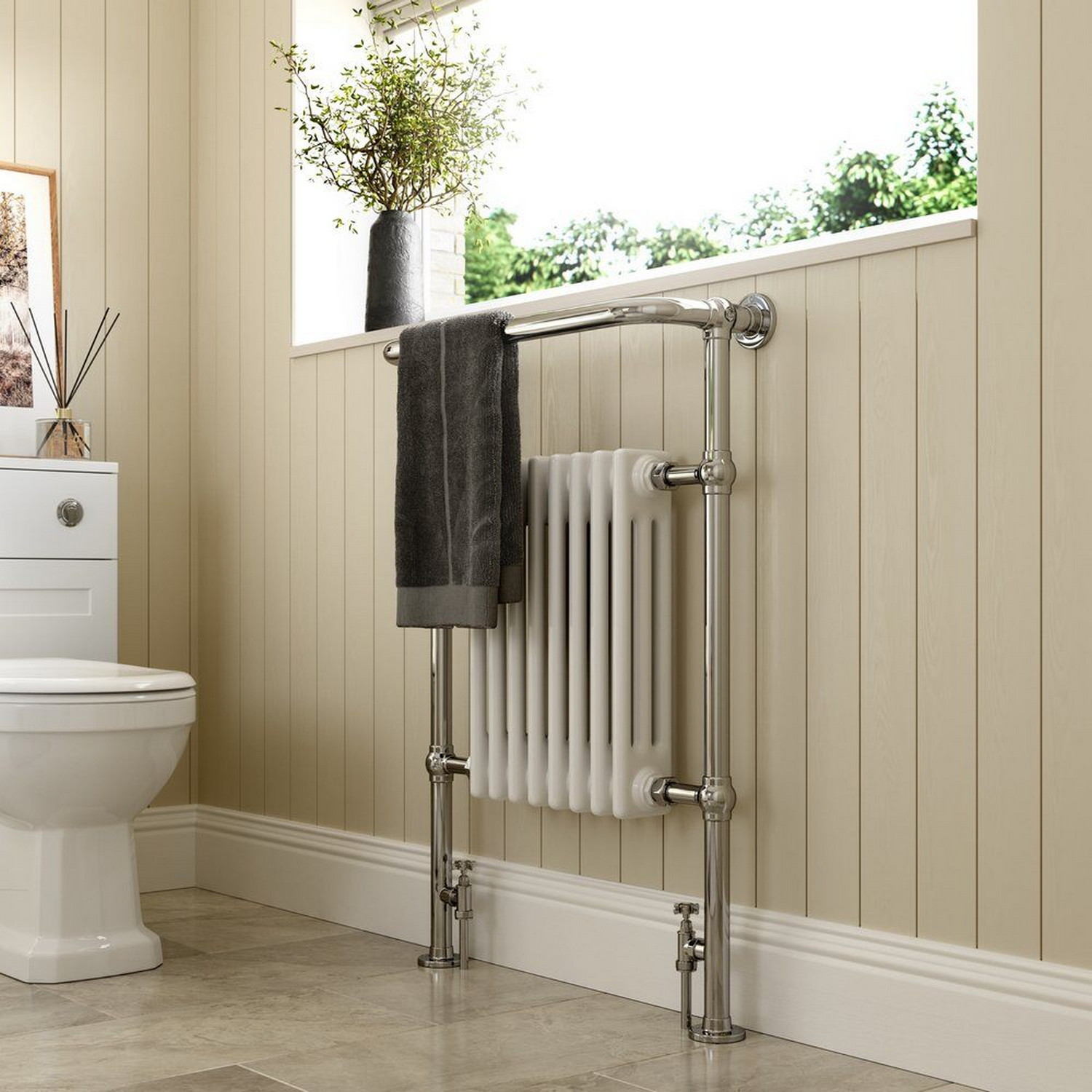
Is your living room chilly despite the heating being on? Or perhaps your box room feels like a sauna within minutes of the boiler firing up? These are common signs that your current heating setup isn’t optimised for the space. Finding the perfect radiator isn’t just about picking a style that matches your decor; it is about mathematics and thermal efficiency. Selecting the correct radiator size ensures your home remains comfortable without wasting energy or unnecessarily increasing your heating bills. Whether you are renovating a period property or updating a modern apartment, this guide provides the essential knowledge you need to make the right choice.
Why radiator sizing matters
It is easy to underestimate the importance of radiator size. A radiator that is too small will struggle to reach the desired temperature, forcing your boiler to run longer. This not only leaves you feeling cold but also increases wear and tear on your central heating system.
Conversely, a radiator that is physically too large for the wall space can dominate a room and limit furniture placement. Getting the size right strikes the balance between heating performance and spatial design, ensuring your home is warmed efficiently.
Factors influencing radiator size
Before you get the tape measure out, you must understand the variables that affect how much heat a room requires. It is not just about the floor area.
- Insulation: A well-insulated new build retains heat much better than a Victorian terrace with solid walls.
- Glazing: Single-glazing loses more heat than modern double- or triple-glazing.
- External Walls: Rooms with more external walls will be naturally colder than those surrounded by other heated rooms.
- Room Location: North-facing rooms generally require a higher heat output than south-facing ones.
If you are unsure where to place your new unit once you have selected it, read our guide on Where to Position a Radiator to maximise efficiency.
Room size and heating requirements
The most critical factor is the physical volume of the space. Larger rooms require more air to be warmed. To understand this, we use a measurement called BTU (British Thermal Units) or Watts.
BTU is the standard unit of energy used in the US to define heating output. The higher the BTU rating, the more heat the radiator emits. When you shop for radiators, you will see this figure listed in the product specifications. Your goal is to match the radiator’s BTU output to your room’s BTU requirement. Read through our guide on BTU for more information.
How do I calculate the size of a radiator I need?
Calculating the required radiator size involves determining the room volume and applying a specific factor based on the room type.
The basic formula is to multiply the room’s Length x Width x Height (in metres) to get the cubic volume. You then multiply this figure by a number that corresponds to the room’s function (for example, bathrooms and living rooms need to be warmer than bedrooms).
While precise calculations often require a plumber or a complex online calculator, you can get a very strong estimate using industry-standard rules of thumb.
What is the rule of thumb for radiator sizing?
If you want a quick estimation to start your search, heating engineers often use a ‘Watts per square metre‘ guide. While not as precise as a full BTU calculation, it provides a solid baseline for standard US homes with average ceiling heights (around 2.4m).
- New Build / Highly Insulated: Approx. 80 W/m².
- Standard Modern Home: Approx. 100 W/m².
- Older / Period Property: Approx 130 Watts per square metre (or higher depending on glazing).
To convert Watts to BTU, you simply multiply the Watts figure by 3.41.
For example, for a 4m x 4m living room (16m²) in a standard home:
- 16m² x 100 Watts = 1600 Watts required.
- 1600 Watts x 3.41 = 5456 BTU.
You would then look for a radiator (or two) that provides a total output of around 5456 BTU.
Types of radiators and their sizes
Once you know the required heat output, you can consider the physical dimensions and styles. Modern design means you are no longer restricted to long, white panels.
Vertical Radiators
If wall space is at a premium, vertical radiators are an excellent solution. They utilise the space above, allowing you to heat a room without sacrificing space for sofas or cabinets.
A fantastic example is the Reina Loco 1800 x 375mm Vertical White Double Aluminium Radiator. It offers high heat output in a narrow footprint. As one of our customers, Margaret T, noted in her five-star review: “Great purchase, had not seen this reversible design radiator anywhere else. Fitted and working now, looks great, just need some colder weather.”
Towel Radiators
In bathrooms, the radiator size often depends on available wall space and the need to warm towels.
For a stylish option that balances output with design, consider the Scudo Vibe 1200 x 500mm Towel Radiator in Brushed Bronze. It is a popular choice for modern bathrooms. One reviewer stated: “Usual good quality from Scudo at a fraction of the cost compared to others. Matches up well with crosswater.”
Should I get a type 21 or type 22 radiator?
When browsing standard panel radiators, you will frequently see terms like “Type 21” or “Type 22“. This refers to the number of panels and convection fins, which directly affects the radiator’s depth and heat output.
- Type 21 (P+): Two panels with one set of convection fins. Slimmer profile.
- Type 22 (K2): Two panels with two sets of convection fins. Deeper profile, but significantly higher heat output.
If you have limited wall width but need high heat, a Type 22 is usually the better choice. For a detailed breakdown, read our blog post: Do I Need a Single or Double Panel Radiator?
Can a radiator be too big for a room?
Technically, yes, but oversizing is generally less of a problem than undersizing. If a radiator has a higher BTU output than the room requires, it will heat the space very quickly.
However, you must have Thermostatic Radiator Valves (TRVs) installed. These valves detect when the room reaches the desired temperature and shut off the hot-water flow. Without TRVs, an oversized radiator will make the room uncomfortably hot and waste energy.
Can a radiator be too small for a room?
Undersizing is a significant issue. If the radiator size is insufficient to meet the room’s thermal load, the space will never reach a comfortable temperature on cold days. Your boiler will work continuously, burning fuel without delivering comfort.
If you have a radiator that seems large enough but isn’t getting hot, it might not be a sizing issue—it could simply need maintenance. Before buying a replacement, check our guide on How to Bleed a Radiator to remove trapped air.
Step-by-step guide to calculating radiator size
To ensure you buy the right product, follow this simple process:
- Measure: Get the length, width, and height of your room in metres.
- Calculate Area: Multiply length by width to get the area in square metres.
- Apply Rule of Thumb: Multiply your square metre figure by 100 (for standard homes) or 130 (for older homes) to get the required Watts.
- Convert to BTU: Multiply the Watts by 3.41.
- Adjust: Add 10% if you have North-facing windows or high ceilings.
- Browse: Look for radiators that meet this total BTU figure. You can split this total across two radiators for larger rooms.
Professional advice and tips
- Check Pipe Centres: If replacing an old unit, measure the distance between the pipe inlets. If the new radiator size differs, you may need to adjust the pipework, which will increase the installation work.
- Don’t Block the Heat: Avoid placing large sofas immediately in front of the radiator. This absorbs the heat, preventing it from circulating in the room.
- Delta T Ratings: Be aware that some manufacturers list BTU output at Delta T60, while the US standard is Delta T50. If you see a high figure, check the Delta rating. If it is T60, the actual output on a standard US boiler system will be lower.
Conclusion
Choosing the right radiator size is the foundation for a warm, energy-efficient home. By taking accurate measurements and understanding the heating requirements of your specific room, you can select a unit that performs perfectly and looks fantastic.
Whether you need a compact vertical model for a kitchen or a high-output Type 22 for a spacious living room, Rockaya Global has a vast selection to suit every property.
Browse our full range of radiators today and find the perfect fit for your home. Contact us today via email at info@rockayaglobal.com, by phone at +1 (571) 581 7190, or through our online contact form.